
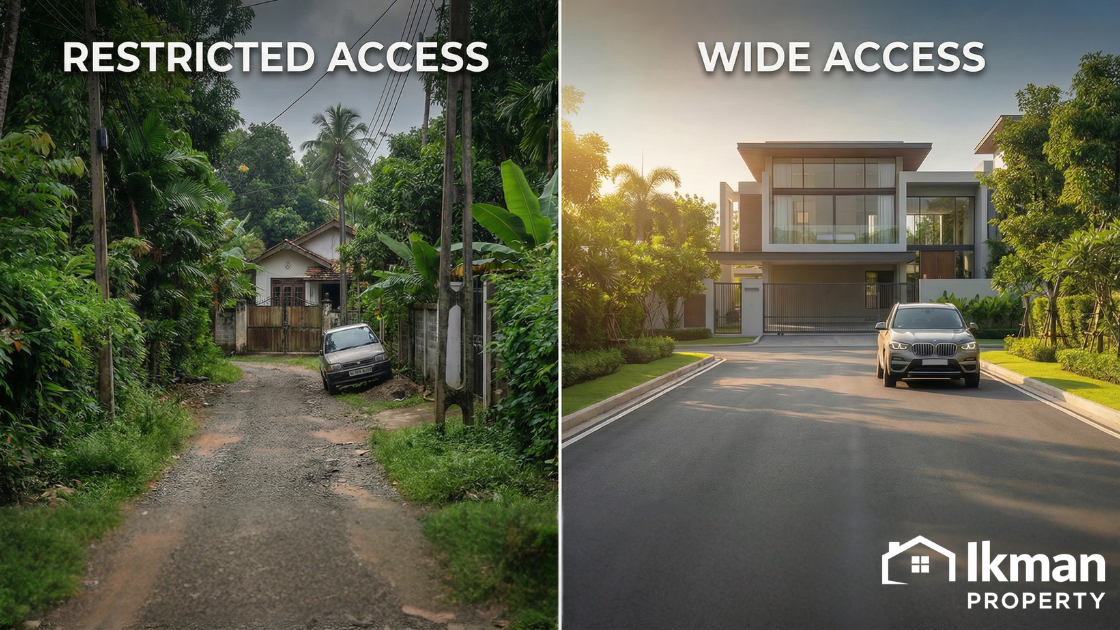
When buying land, most people focus on the deed, location, and price. Very few pay close attention to one critical detail.
The width of the access road.
You are not just paying for the land. You are also paying for access. If that access is not legally acceptable, your entire investment can become difficult to use.
Why Road Width Matters More Than You Think
In Sri Lanka, road width is not just a measurement. It directly affects:
- Building plan approval
- Property value
- Loan eligibility
- Future resale potential
Even a small difference can create serious problems.
The Hidden Risk Buyers Often Miss
Many buyers carefully check the deed but overlook the physical condition of the access road.
According to regulations, a minimum road width is required for building approval. If your access road is even slightly below the required width, your building plan can be rejected.
For example, if the required width is fifteen feet, even a small shortfall can cause issues during approval.
This is one of the most common mistakes in land purchases.
Plan vs Actual Ground Reality
Do not rely only on the survey plan.
A plan may show a certain road width, but the actual ground condition can be different. Fences, walls, or encroachments can reduce the usable width.
What matters legally is the physical width on the ground, not just what is shown on paper.
Always measure the road yourself before making a decision.
How Road Width Affects Bank Loans
Banks also consider road access when evaluating a property.
A land with a wider access road is seen as lower risk. This can result in a higher loan amount being approved.
On the other hand, limited access can reduce the loan percentage or even lead to rejection.
This directly affects your financial flexibility.
Important Checks Before Buying Land
Verify the Street Line
Obtain confirmation from the local authority about the official road width and any future road expansion plans.
This helps you avoid legal complications later.
Check Turning Space for Dead End Roads
If the land is located at the end of a closed road, there must be enough space for vehicles to turn.
Without proper turning space, building approval may not be granted.
Confirm the Road Actually Exists
Sometimes roads appear on plans but are not properly accessible on the ground.
Check physically to ensure the road is clear, usable, and not blocked by neighboring properties.
Consider Future Construction Plans
Even if you can build now, future expansions may be affected by road width limitations.
This can reduce the long term value of your property.
A Smarter Approach to Land Investment
A good property is not just about location or price. It must also meet legal and practical requirements.
Pay attention to details that are easy to miss. These small factors can have a big impact on your investment.
Conclusion
Road width is one of the most overlooked factors in land buying, yet it plays a major role in determining usability and value.
Before purchasing land, take the time to verify all access details properly. It can save you from costly mistakes and ensure your investment remains secure.
Disclaimer
This article is for general informational purposes only. Land regulations and approval requirements may vary depending on local authorities. Always verify details with the relevant authorities and consult professionals before purchasing property.